From Curiosity to the Edge of Space: The History of High-Altitude Balloons
Explore the rich history of high-altitude ballooning — from the Montgolfier brothers in 1783 to modern near-space missions accessible to students and engineers.
Key Takeaways
- High-altitude ballooning dates back to 1783 with the Montgolfier brothers
- Hydrogen-filled balloons became floating scientific laboratories throughout the 1800s
- Cold War-era programs like Project Manhigh sent humans above 30 km before any spacecraft
- Modern electronics made near-space missions accessible to hobbyists and classrooms
- Balloons remain one of the most cost-effective tools for stratospheric research today
From Curiosity to the Edge of Space: The History of High-Altitude Balloons
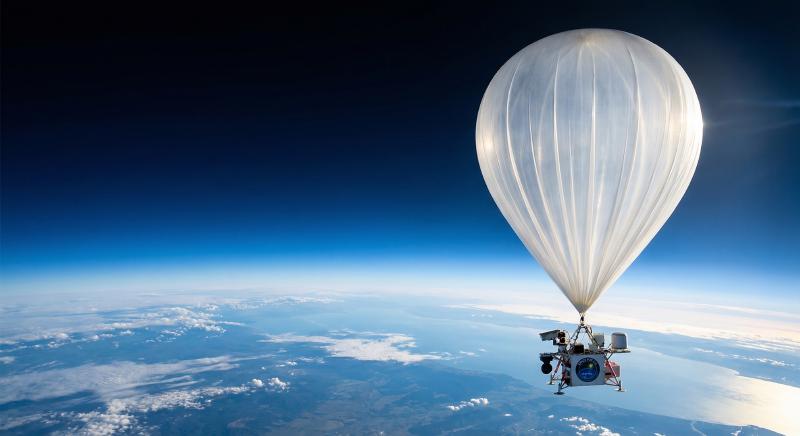
Long before rockets carried satellites into orbit, high-altitude balloons were humanity’s first vehicles to the edge of space.
Today, schools, engineers, and research teams use modern latex weather balloons and compact avionics systems to conduct missions that would have required government funding just a generation ago. But the roots of high-altitude ballooning stretch back more than two centuries.
Here’s how we got here.
The First Ascent: The Montgolfier Brothers (1783)
In 1783, French inventors Joseph and Étienne Montgolfier launched the first untethered hot air balloon. Their early experiments used heated air rather than a lighter-than-air gas, but they proved a radical concept: objects could leave the ground and explore the sky.
It was the birth of aerostatics — the science of lighter-than-air flight.
Within months, hydrogen-filled balloons were also flying. Hydrogen’s far greater buoyancy made higher altitudes possible, and scientists immediately recognized the potential for atmospheric exploration.
Hydrogen Balloons and Scientific Exploration (1800s)
Throughout the 19th century, balloons became floating laboratories.
Scientists used them to:
- Measure temperature and pressure profiles at altitude
- Study atmospheric composition — discovering how the atmosphere changes with height
- Conduct reconnaissance and observation during military conflicts
These flights were not comfortable or safe. Balloonists faced freezing temperatures, hypoxia, and the constant risk of rapid uncontrolled descent. Yet they generated some of the first systematic data about the atmosphere above the surface.
The 1800s established a foundational truth: the atmosphere is a layered system, and balloons were the first tool capable of sampling it directly.
Entering the Stratosphere (Early 1900s)
The 20th century brought purpose-built high-altitude balloon programs designed specifically to reach the stratosphere — the atmospheric layer above 12 km (about 39,000 ft) where weather systems end and conditions begin to approach space.
National Geographic Society and U.S. Navy programs funded record-breaking manned flights in the 1930s. Auguste Piccard, a Swiss physicist, became the first person to reach the stratosphere in a pressurized gondola in 1931, ascending above 15,000 meters (49,000 ft).
These flights weren’t about adventure — they were science. Cosmic ray research, temperature measurements, and atmospheric composition studies depended on getting instruments above the densest layers of air.
Project Manhigh: Precursor to Spaceflight (1950s)
One of the most consequential balloon programs in history ran quietly through the late 1950s: Project Manhigh, a U.S. Air Force initiative that sent humans above 30 km (100,000 ft) to study cosmic radiation and human survivability in near-space conditions.
Before orbital spacecraft existed, Manhigh answered critical questions:
- Could humans survive exposure to cosmic radiation at stratospheric altitude?
- What physiological effects would near-space conditions produce?
- How should life support systems be designed for extreme altitude?
The data collected directly influenced the design of early spacesuits and spacecraft life support systems. Manhigh was, in many ways, a dress rehearsal for the space age.
Weather Balloons Become Routine (Mid-20th Century)
As meteorology matured, radiosondes — small sensor packages attached to latex weather balloons — became a global standard.
Agencies like NOAA launch weather balloons twice daily from hundreds of stations worldwide, collecting:
| Measurement | Why It Matters |
|---|---|
| Temperature | Models atmosphere for weather forecasting |
| Pressure | Determines altitude and pressure systems |
| Humidity | Critical for precipitation prediction |
| Wind speed & direction | Core input for all weather models |
| Ozone concentration | Monitors atmospheric chemistry |
Nearly every modern weather forecast depends on this balloon-collected data. The global radiosonde network represents one of the longest-running and most consequential scientific infrastructure programs in history.
The Modern HAB Era (2000s–Present)
In the 2000s, something changed.
Electronics became smaller. GPS receivers became cheap and accessible. Microcontrollers — Arduino, Raspberry Pi, and their descendants — became powerful enough to log sensor data, control cameras, and transmit GPS coordinates at minimal cost.
Suddenly, a mission that once required government infrastructure could be built on a table in a garage.
High-altitude ballooning became:
- A STEM classroom tool — schools could conduct real atmospheric experiments
- A university aerospace research platform — affordable stratospheric testing
- A low-cost validation testbed — for engineers developing hardware
- A community hobby — global communities sharing flight data, photos, and techniques
Platforms like the SkyReachSupply SKRHAB 1 represent this democratization: structured, capable systems that let classrooms and researchers focus on their experiments rather than sourcing and integrating individual components.
Balloons vs. Rockets: A Different Tool
It’s worth placing balloons in context. Rockets and balloons are not competitors — they serve different missions.
| Characteristic | Balloons | Rockets |
|---|---|---|
| Ascent speed | Slow (~4–6 m/s) | Fast (hundreds of m/s) |
| Duration at altitude | Minutes to hours | Seconds |
| Payload recovery | Routine | Complex or impossible |
| Cost | Low | High |
| Altitude ceiling | ~40 km (130,000 ft) | Unlimited |
| Shock/vibration loads | Minimal | Extreme |
For payload testing, sensor calibration, atmospheric research, and flight systems validation, balloons are often the smarter first step before committing hardware to a rocket flight.
Many aerospace engineers quietly admit they prototype on balloons before risking hardware on a rocket.
Why This History Matters
Every satellite begins with testing. Every atmospheric model needs validation. Every aerospace engineer started somewhere.
High-altitude balloons have threaded through all of it — from Montgolfier’s first tentative ascent to modern student missions reaching 100,000 feet with cameras and GPS trackers.
They represent one of the most powerful truths in aerospace:
You don’t need to go orbital to do meaningful work at the edge of space.
Sometimes, you just need lift.
Curious about what it takes to run a mission today? Browse our HAB kits or contact us — we’re happy to help you plan your flight.